
How Commercial Property Maintenance Helps Avoid Costly Downtime
Commercial property maintenance in Southend-on-Sea is not only about keeping a building looking professional. Planned maintenance helps businesses reduce unexpected failures, protect staff and customers, keep equipment and property in usable condition, and avoid disruption during the busiest part of the day.
For offices, shops, hospitality venues, facilities, and other commercial properties, a maintenance problem can quickly become an operational problem. Our commercial services focus on practical repair, maintenance, installation, and replacement work for business environments.
Why Maintenance Matters More in a Working Business
A home can sometimes tolerate a minor inconvenience for a day. A business may not have that luxury.
A failed entrance can affect customer access. A lighting fault can close part of a shop. A leak can damage stock or interrupt staff. A ventilation problem can make a workspace uncomfortable.

The cost of the repair is only part of the impact. There may also be lost trading time, staff disruption, customer complaints, emergency call-out costs, and secondary damage.
Planned Maintenance Versus Reactive Maintenance
Reactive maintenance means responding after something fails.
Planned maintenance means inspecting, servicing, or replacing components before failure is likely.
Every commercial property needs some reactive work, but relying on it for everything can make costs unpredictable.
A balanced approach might include:
- regular visual inspections
- scheduled servicing
- keeping maintenance records
- responding quickly to early warning signs
- planning replacement of worn components
- retaining reliable contractors for urgent issues
The Health and Safety Executive explains that effective maintenance helps make equipment more reliable and reduces the risks associated with faults. Its guidance on maintenance of work equipment also stresses that maintenance itself must be planned and carried out safely.
Start With Business-Critical Areas
Not every fault has the same effect on your operation.
Identify the areas where failure would cause the biggest problem, such as:
- customer entrances
- fire and emergency routes
- lighting in public or working areas
- water services
- heating and ventilation
- essential equipment
- secure doors and access controls
- areas containing stock or sensitive equipment

Those areas deserve faster reporting and a clearer maintenance plan.
Keep a Simple Maintenance Log
A maintenance log does not need to be complicated.
Record:
- date the issue was reported
- location
- symptoms
- action taken
- contractor
- parts replaced
- any recommended follow-up
- date for the next check if required
This helps identify recurring failures and gives managers useful information when deciding whether to repair or replace something.
It also prevents the same issue being reported repeatedly without anyone seeing the pattern.
Watch for Repeated Small Failures
Repeated small repairs can be a warning that a component has reached the point where replacement is more economical.
If the same entrance mechanism, fitting, light, plumbing connection, or piece of equipment requires repeated attention, compare the cumulative cost with a planned replacement.
Our replacement services can support that decision where existing components are damaged, outdated, or no longer dependable.
Schedule Work Around Operations
Commercial maintenance should be planned around how the business operates.
Ask:
- Can the work be completed before opening?
- Can one area be isolated while the rest remains open?
- Is noise or dust likely?
- Will water or power need to be interrupted?
- Does the contractor need access to restricted areas?
- Are customers likely to be present?
- Is special site induction required?
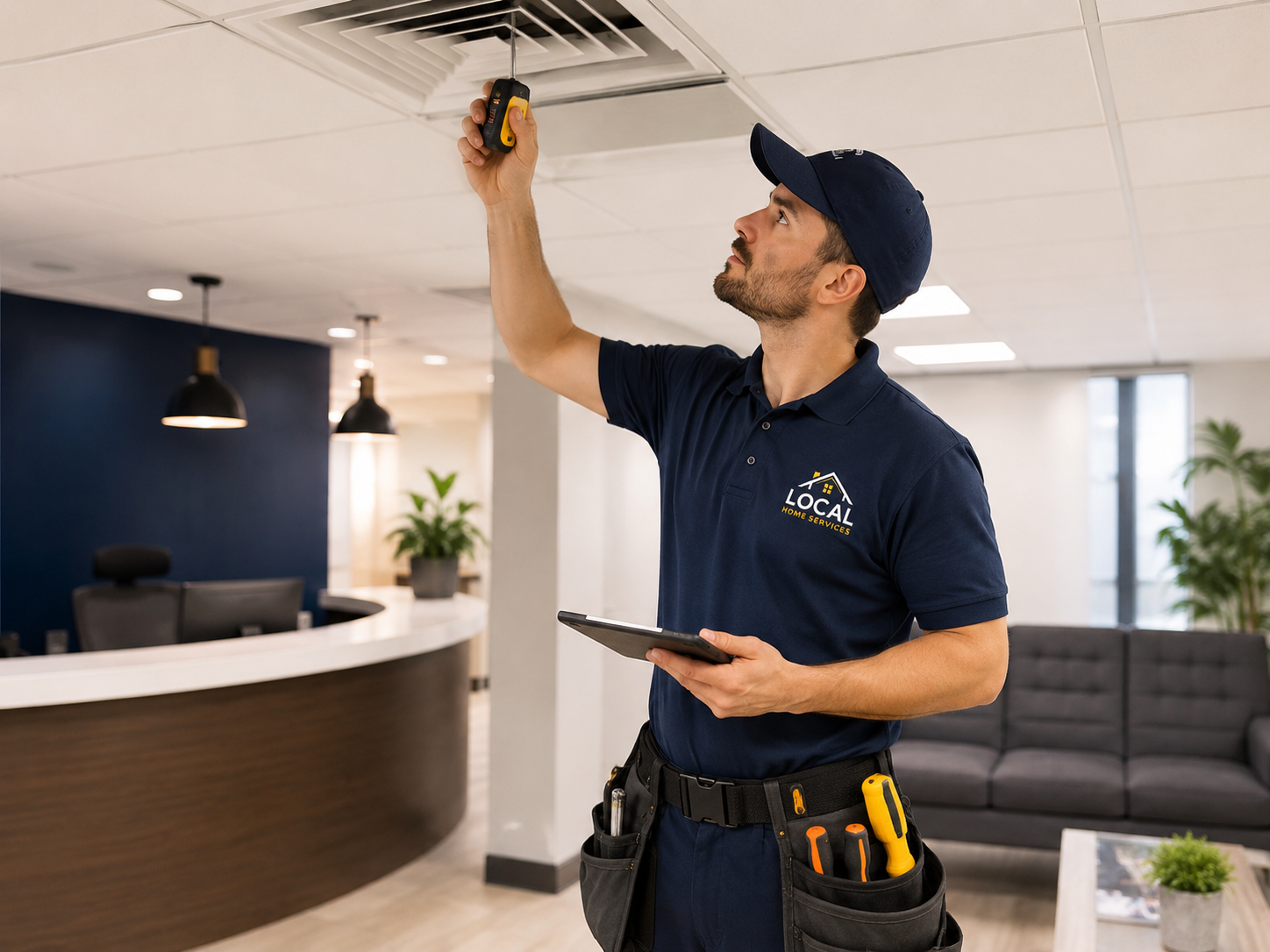
A little planning can turn a disruptive repair into a routine maintenance visit.
Do Not Treat Safety-Critical Work as General DIY
Businesses have responsibilities to protect employees and others affected by their activities. Electrical, gas, work equipment, working-at-height, and other specialist areas need appropriately competent people.
HSE’s maintenance guidance notes that poorly planned maintenance can itself expose workers and others to risk. For electrical work, Electrical Safety First recommends competent registered professionals and publishes electrical safety guidance.
The cheapest contractor is not a saving if the work is unsafe or has to be done twice.
Entrances and Customer-Facing Areas Matter
A damaged door, loose handle, failed closer, cracked finish, poor lighting, or unreliable lock creates a bad first impression before a customer even speaks to your team.
Customer-facing maintenance deserves attention because it affects:
- safety
- accessibility
- security
- appearance
- brand perception
- customer confidence
Small repairs completed quickly can help keep the property looking managed and professional.
Prevent Water Damage Where Possible
Commercial water damage can affect stock, flooring, electrical equipment, ceilings, and neighbouring areas.
Train staff to report:
- drips
- staining
- unusual water sounds
- slow drainage
- wet flooring
- recurring smells
- changes around toilets or sinks
Managers should also know where the main water shut-off is located and who is authorised to use it in an emergency.
Early reporting is often the difference between a repair and a major clean-up.
Think Ahead About Replacements and Upgrades
Planned replacement allows you to:
- get quotes before the item fails
- choose suitable products
- schedule downtime
- coordinate multiple jobs
- budget properly
- avoid rushed decisions
This is particularly valuable for frequently used components such as doors, lighting, fixtures, controls, and equipment serving public areas.
For planned additions, our installation services can support new fixtures or upgrades, while commercial services cover broader property needs.
Local Commercial Maintenance in Southend-on-Sea
Businesses in Southend-on-Sea, Leigh-on-Sea, and surrounding Essex areas range from offices and independent shops to hospitality and service businesses.
Each property has a different operating pattern, so maintenance planning should reflect when customers arrive, when staff work, and which areas are critical.
A maintenance plan for a quiet office will look different from one for a busy retail unit.
Frequently Asked Questions
How often should a commercial property be inspected?
The frequency depends on the property, equipment, level of use, manufacturer instructions, and legal requirements. High-use or safety-critical items usually need more frequent attention.
Is planned maintenance cheaper than reactive maintenance?
Not every planned task saves money immediately, but planned maintenance can reduce breakdowns, emergency call-outs, secondary damage, and operational disruption.
Should we keep maintenance records?
Yes. Records make recurring issues easier to identify and can be important for equipment, safety, warranties, compliance, and budgeting.
Can maintenance be done outside normal business hours?
Often yes, depending on the contractor and job. Discuss access, noise, power or water interruptions, and site security in advance.
Keep Your Business Moving
If small property problems are becoming repeated interruptions, a more planned approach may help. Our commercial services support local businesses with repairs, maintenance, installations, and replacements.
Contact us or call {{custom_values.main_phone_display}} to discuss the property and the best time to carry out the work.
